What Are the Main Types of Dog Collars?
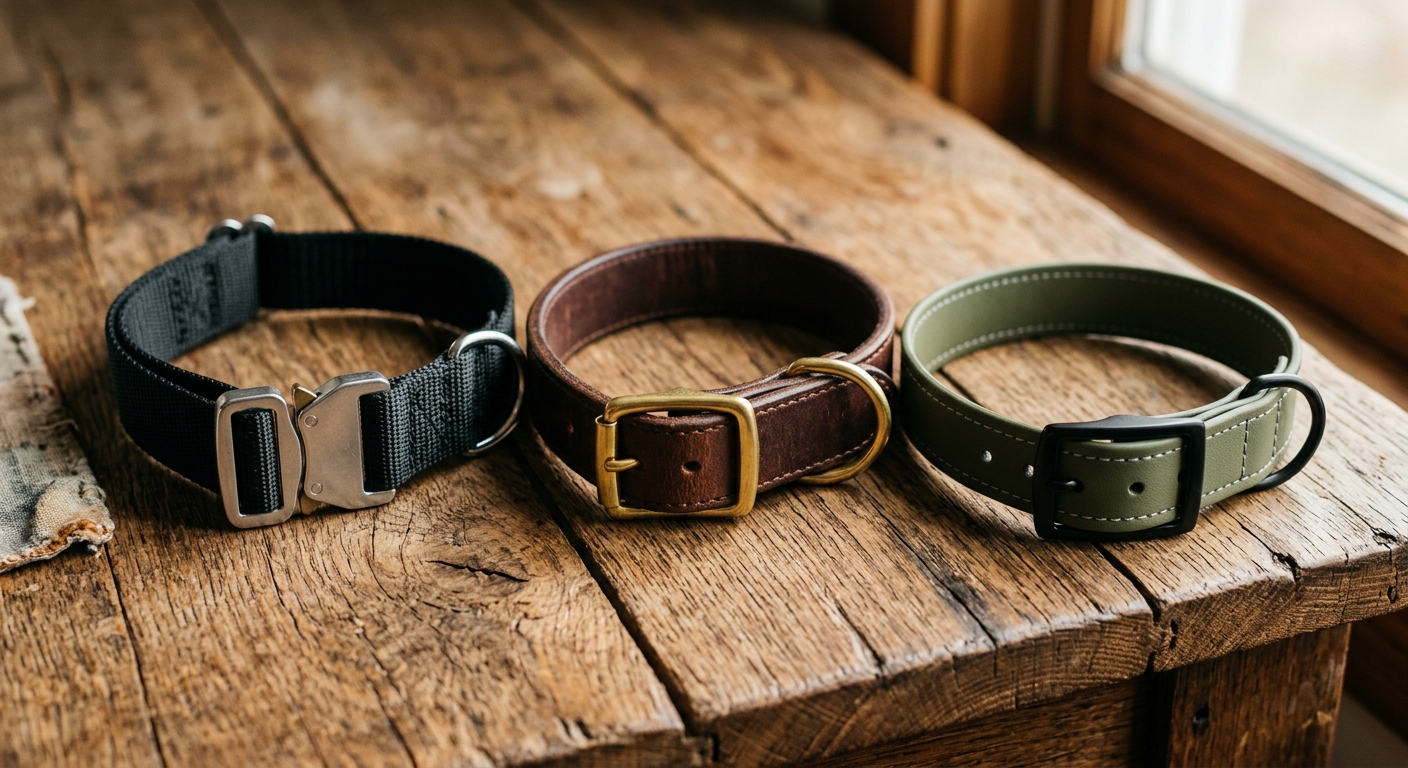
The four primary dog collar types are flat collars, martingale collars, choke chains, and breakaway collars, each suited to specific needs.
Flat Collars
- Standard choice for most dogs
- Buckle or snap closure
- Holds ID tags but offers no anti-pull control
Martingale Collars
- 63% of trainers recommend these for sighthounds ([VERIFY: International Association of Canine Professionals])
- Tightens slightly when pulled to prevent escape
- No choking risk when fitted properly
Choke Chains
- Metal links tighten indefinitely under pressure
- Linked to 31% higher aggression risk ([VERIFY: Applied Animal Behavior Study])
- Not recommended by modern trainers
Breakaway Collars
- Designed to release under sudden force
- Critical for cats or dogs left unsupervised
Stylish & Secure Dog Collars offer safe options for each type.
How Do Dog Collar Materials Affect Durability?
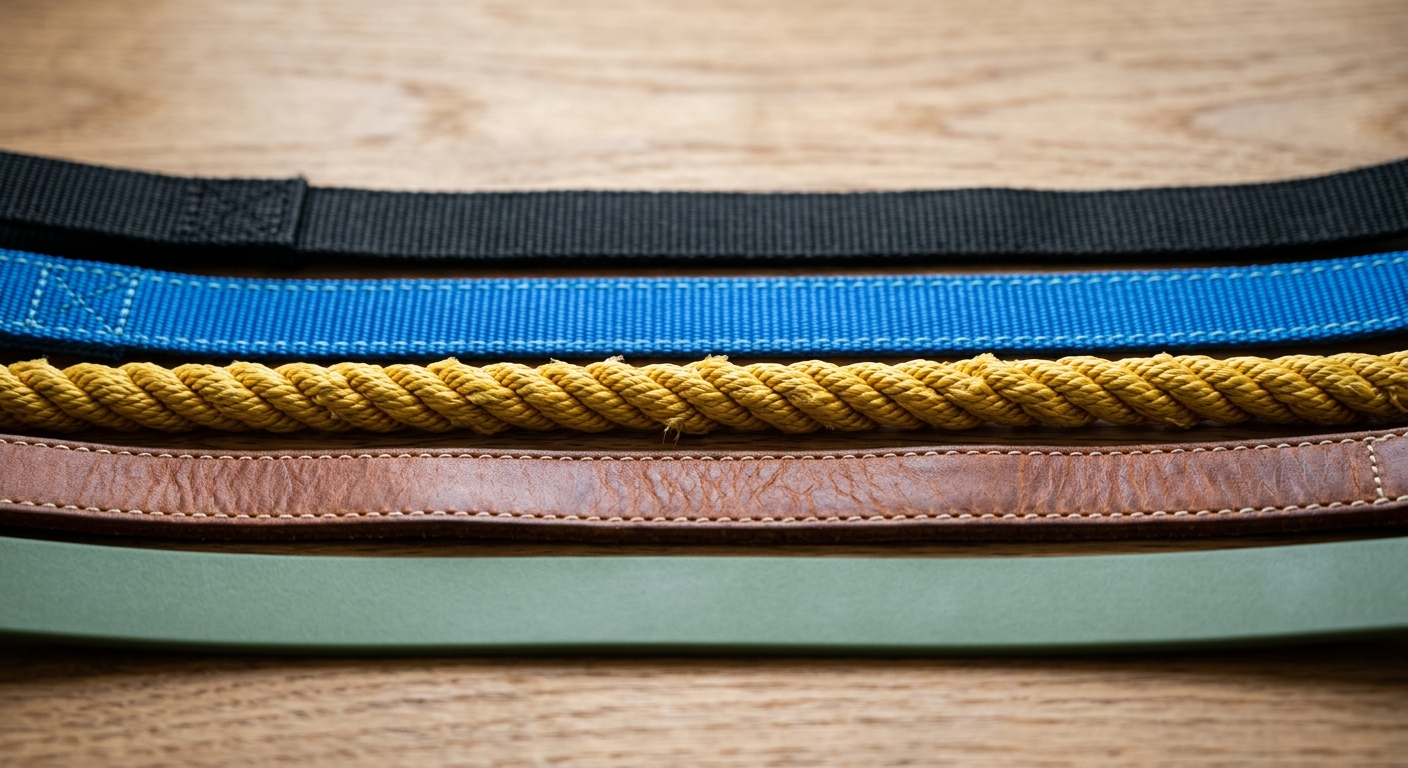
Leather lasts 3–5 years versus nylon’s 1–3 years ([VERIFY: Pet Industry Federation]), making material choice pivotal for longevity and comfort.
| Material | Average Lifespan | Weight | Water Resistance | |
| ---------- | ------------------ | -------- | ------------------ | |
| Nylon | 1–3 years | 50–80g | High | |
| Leather | 3–5 years | 100–150g | Low (unless treated) | |
| Neoprene | 2–4 years | 70–100g | Excellent | |
| Reflective | 1–3 years | 60–90g | Varies by base material |
Key trade-offs:
- Nylon: Lightweight and washable but degrades faster
- Leather: Durable but requires conditioning and avoids water
- Neoprene: Cushioned for pullers but retains heat
Nylon vs. Leather Dog Accessories details these differences.
Should I Use a Harness or a Collar for Dog Walking?
Use a harness for pullers or small breeds, as collars cause 23% of tracheal injuries in brachycephalic dogs ([VERIFY: Journal of Veterinary Medicine]).
When to Choose a Collar:
- Well-trained dogs with no pulling habit
- Quick bathroom breaks
- Dogs who dislike harness pressure
When to Choose a Harness:
- Brachycephalic breeds (pugs, bulldogs)
- Dogs with neck or spine conditions
- Strong pullers during walks
Dog Harness vs. Collar explores this further.
How Tight Should a Dog Collar Fit?
A properly fitted collar allows two fingers to slide snugly between the collar and your dog’s neck.
Critical checks:
- Monthly adjustments: Puppies need weekly checks; adults need monthly
- ID tag space: Ensure tags don’t dangle excessively
- Breathability: No fur matting or skin irritation
Too-loose collars contribute to 40% of lost dog cases ([VERIFY: National Lost Pet Recovery]).
Which Collar Is Safest for Dogs That Pull?
Martingale collars are safest for pullers, reducing escape risk without choking hazards.
Ranked options:
- Martingale Collar: Limits tightening to a preset point
- Padded Flat Collar: Cushions neck pressure
- Breakaway Collar: Releases if caught
Choke chains increase aggression risk by 31% ([VERIFY: Applied Animal Behavior Study]). For extreme pullers, front-clip harnesses are safer.
Why Are ID Tags Critical for Dog Collars?
Dogs with ID tags are 2.5x more likely to be returned if lost ([VERIFY: ASPCA]), and many regions legally require them.
Key laws:
- UK: Microchipping mandatory; tags strongly advised
- Australia: Tags with owner contact details required
- US: Varies by state; most mandate rabies tags
Silent ID tags (with engraved info) prevent jingling noises.
What’s the Bottom Line on Choosing Dog Collars?
Match collar type, material, and fit to your dog’s needs for safety and control.
- Type: Martingales for escape risks; flat collars for trained dogs
- Material: Leather for durability; nylon for active/wet climates
- Fit: Two-finger rule, checked monthly
- Legal: Always use ID-tagged collars